|
Guinea Pig Care
These small creatures are an ideal first pet for small children to learn to be responsible for an animal. Adult supervision is still required to check that the animal is being correctly cared for. They don’t require the expense, room or exercise of a larger pet, but are still charming and entertaining! Of course, they are also an excellent educational experience for young children.
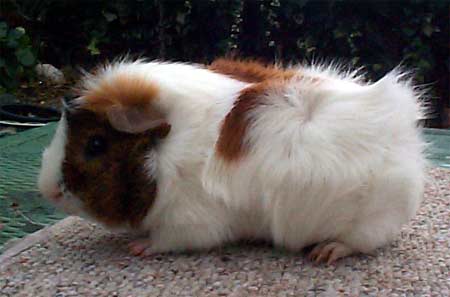
These are neither pigs, nor from Guinea, they are in fact tailless rodents from Peru. The Latin name for guinea pigs is: Cavy procellus, which is often shortened to cavy.
Housing:
Cavies should be housed in cages which are at least one square foot of space per animal. (0.9m2). The bottom of the cage should be made of smooth plastic-this makes the cage easy to clean and disinfect with 1 part bleach and 10 part water solution. The cage should also have adequate ventilation (keeping cavies in the garage is not recommended for this reason).
The best bedding is pine shavings. Sawdust is too fine, and the oils in cedar shaving could cause respiratory problems. A sheet of newspaper can be put underneath the pine shavings for extra absorbency.
Cages should be kept dry and should be placed away from direct sunlight or drafts. Cavies react to temperature extremes just like people and should not become too hot or too cold. A small house made of wood or plastic should be placed in the cage for a hiding place.
Diet:
A proper diet is essential for good health. Cavies do not manufacture Vitamin C (just like humans don’t), therefore, they must be fed a diet high in Vitamin C. Guinea Pig food has Vitamin C added to it, but rabbit food does not (though it looks the same).
***DO NOT FEED RABBIT FOOD TO YOUR CAVY!
Additional sources that can be fed daily include: orange slices, kiwi, and strawberries. Other treats can also be fed in addition to pellets, for example: carrot and top, apple, romaine lettuce, spinach, parsley, timothy hay, strawberries, watermelon, and endive. However, it is not recommended to overdo fresh foods, as this could lead to diarrhea.
Water must be available at all times. A large water bottle filled with fresh water daily is essential to the health of your animal.
Health:
Guinea Pigs can live 5 to 7 years with proper care. However, they are sensitive to the human cold virus, so if you are sick, try to avoid handling your cavy. A healthy cavy should have a full coat, bright eyes, a good appetite and weigh between 1 and 2 pounds.
Overfeeding your cavy and not providing exercise, could lead to health problems.
When excited, cavies often “talk,” this means they make high pitched whistling sounds when they hear your voice or the fridge door opening!
|